


Before Virginia Had a Name: An Introduction to More Than 13,000 Years of Native History

Before There was a Virginia, There were People
Before Jamestown. Before Williamsburg. Before English ships entered the Chesapeake Bay. Before anyone drew the boundaries of Virginia on a map, generations of Native people were already living along its rivers, walking through its forests, gathering food from its wetlands, raising children, making tools, building communities, and passing knowledge from one generation to the next.
Imagine standing along a Virginia river thousands of years ago.
There are no roads behind you.
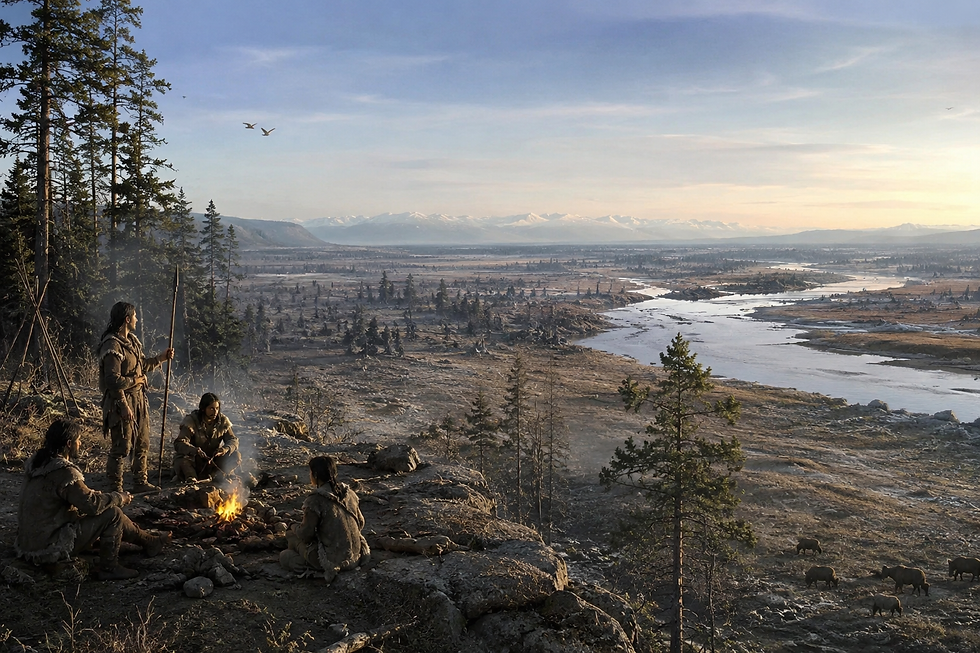
No church bells ring in the distance. No plantation houses stand along the shoreline. There are no county lines, courthouses, fences, or European place-names.
Instead, you hear water moving against the riverbank.
Birds call from the trees.
Smoke rises gently from a fire.
Someone is preparing food. Nearby, another person sits with a piece of stone in one hand and a tool in the other. A child watches carefully as flakes of stone fall to the ground.
Perhaps someone has returned from hunting.
Perhaps another group is gathering nuts, berries, roots, or other plants.
Perhaps a family is preparing to travel.
Or perhaps they have returned to a familiar place their people have visited for generations.
This is Virginia before Virginia had a name.
And its story stretches back more than 13,000 years.
A Land That Was Always Changing
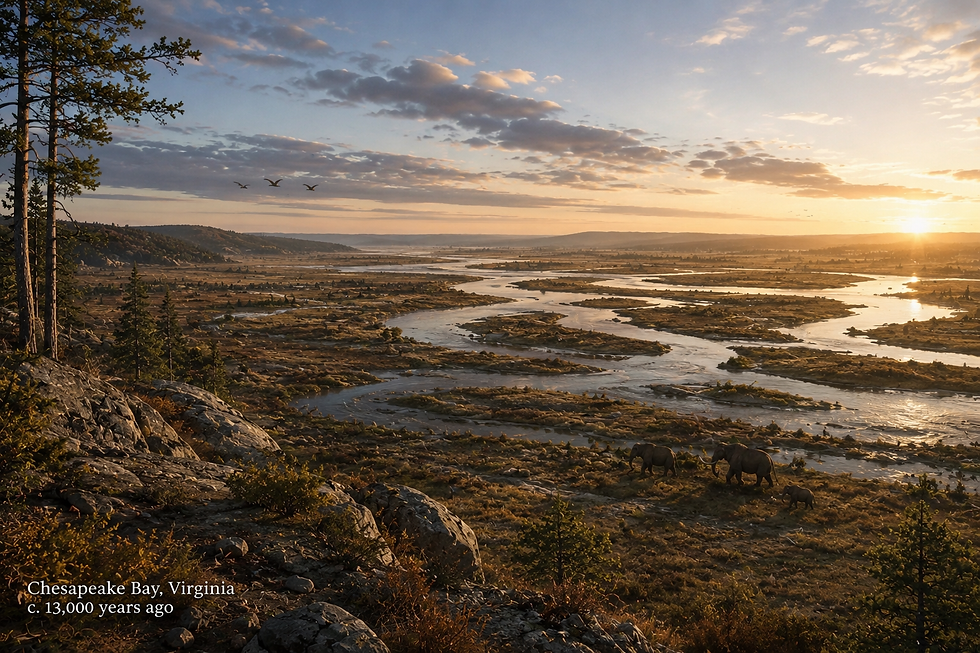
The Virginia landscape we recognize today did not always look the same.
Over thousands of years, temperatures changed. Forests expanded. Rivers shifted. Wetlands formed. Sea levels rose. Shorelines moved.
The Chesapeake Bay itself developed gradually as rising seas flooded ancient river valleys.
Places that were once dry land eventually disappeared beneath water.
Animals changed too.
Some species vanished while others became increasingly important sources of food. Plants spread into new environments, creating new opportunities for gathering and eventually cultivation.
Native people responded to these changes again and again.
They adapted.
They experimented.
They remembered.
And they taught the next generation what they had learned.
That ability to adapt is one of the great themes running through Virginia's ancient Native history.
The Paleoindian World: c. 13,000–8000 B.C.
Our journey begins near the end of the last Ice Age.
Imagine a small group moving across a colder Virginia landscape.
Everything they carry must have a purpose.
A stone projectile point may help provide food.
A cutting tool may help prepare an animal.
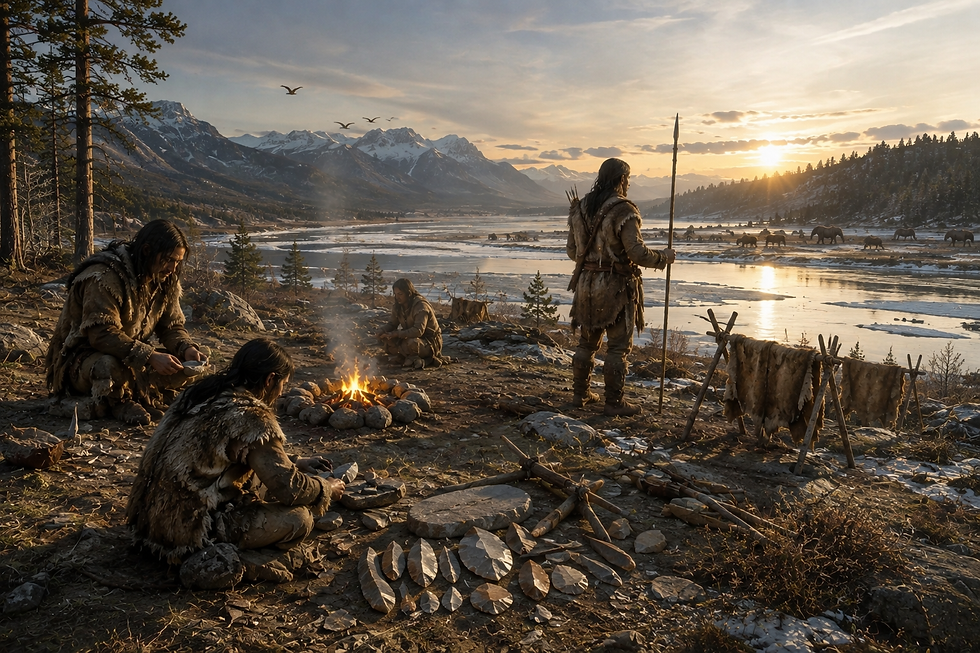
Other objects made from wood, bone, hide, and plant fibers may be equally important, although many will not survive long enough for archaeologists to discover them.
These people know where water can be found.
They understand the movements of animals.
They recognize valuable stone.
They know when it is time to move.
Archaeologists call this the Paleoindian period.
These were among the earliest well-documented inhabitants of the region. Their communities were generally highly mobile, relying upon hunting, gathering, and extensive knowledge of the environment.
But they were not simply wandering through an unknown wilderness.
They were learning a landscape that would become increasingly familiar to generations of Native people.
The Archaic World: c. 8000–1200 B.C.
Now allow thousands of years to pass.
The climate grows warmer.
Virginia's forests become more familiar to modern eyes.
Deer move through the woods. Fish fill rivers and streams. Nuts, seeds, roots, fruits, and other plant foods become increasingly important.
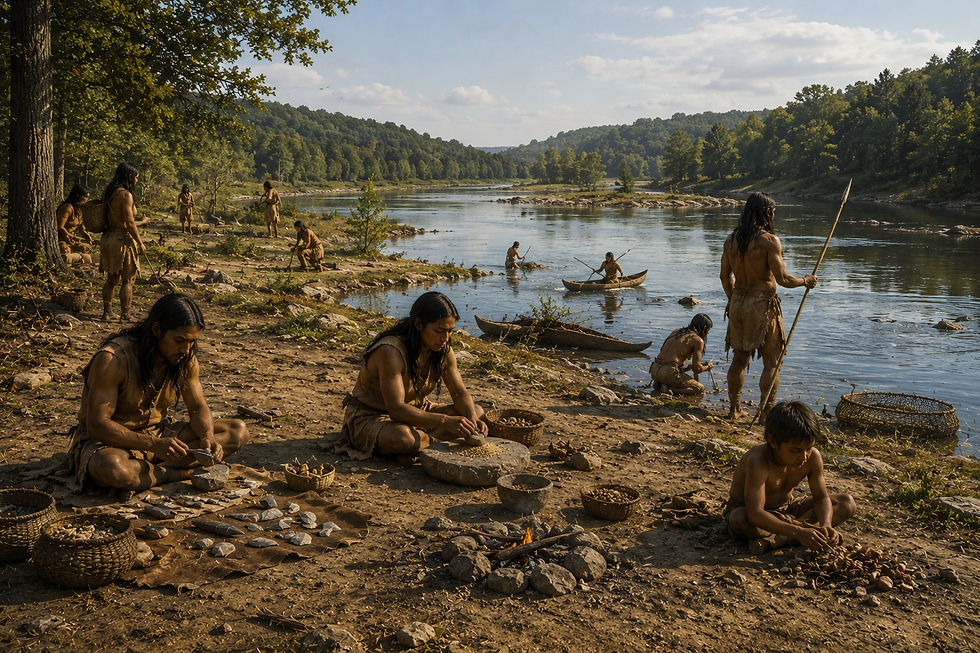
Native families adapt their lives to these resources.
A river becomes more than a source of water.
It becomes a highway.
A fishing place.
A gathering place.
A familiar landmark.
Perhaps a place people return to year after year.
This is the Archaic period, an enormous span lasting nearly 7,000 years.
People developed increasingly diverse ways of using Virginia's forests, rivers, wetlands, and coastal environments. Technologies changed. Tools changed. Food-processing strategies expanded.
Knowledge of particular places became increasingly detailed.
Imagine a grandmother showing a child where nuts can be gathered every autumn.
Imagine someone teaching a younger relative how to fish a particular section of river.
Imagine families returning to a campsite their relatives had used before them.
With every generation, knowledge accumulated.
The land was becoming not simply somewhere people survived.
It was home.
The Woodland World: c. 1200 B.C.–A.D. 1600
Another transformation followed.
Imagine approaching a Native community beside a Virginia river centuries before Jamestown.
Smoke rises from houses.
People are working nearby.
Someone tends plants.
Another person prepares food inside a pottery vessel.
Children move among relatives.
People travel along waterways, visit neighboring communities, exchange goods and information, and maintain relationships extending beyond their own settlements.
This is the Woodland period.
Pottery became increasingly important. Horticulture and eventually agriculture expanded. In many areas, communities became more settled, and villages grew.
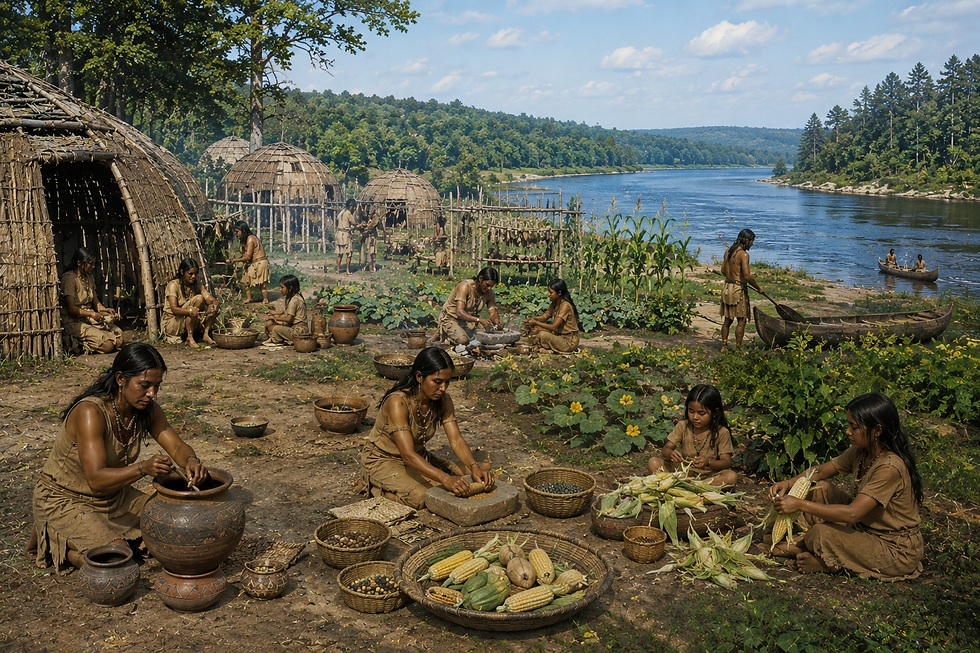
Over time, crops such as corn, beans, and squash became increasingly significant, particularly during the later Woodland centuries, although hunting, fishing, and gathering continued to be essential.
Societies also became increasingly complex.
Political relationships developed between communities. Trade networks connected people across considerable distances. Ceremonial and social traditions continued to evolve.
By the Late Woodland period, we are moving closer to the world of the Native peoples whose descendants and communities would confront the enormous changes brought by European expansion.
Then Sails Appeared
Imagine standing near the Chesapeake as an unfamiliar vessel appears in the distance.
At first, perhaps it is only a shape against the horizon.
Then it comes closer.
The people watching from shore could not know everything that would follow.
This begins another dramatic chapter—the Contact and Colonial Era.
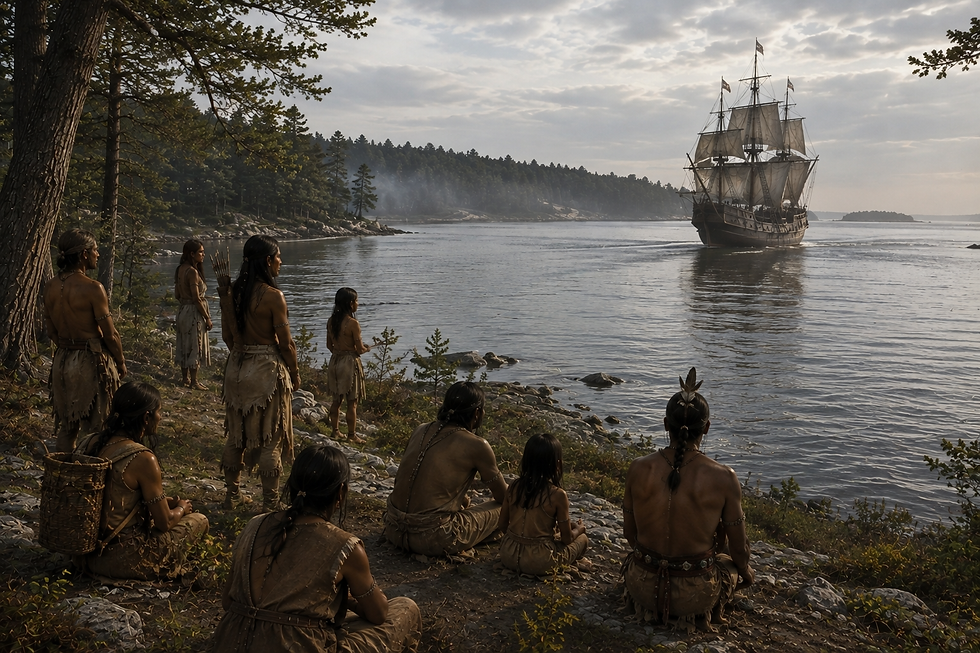
European arrival did not mark the beginning of Virginia history.
It marked the meeting of peoples whose histories had developed separately for thousands of years.
For Virginia's Native peoples, sustained European colonization brought devastating consequences.
Disease swept through communities.
Land was taken.
Wars were fought.
Treaties were negotiated and sometimes violated.
Native communities faced displacement, changing economies, missionary efforts, political pressure, and attempts to transform or erase Indigenous identities.
Yet this is not simply a story of disappearance.
It is also a story of survival.
Native families adjusted to changing circumstances, defended their communities, maintained relationships, negotiated with colonial governments, preserved traditions, and continued passing identities and memories to later generations.
Virginia's Native story did not end when Europeans arrived.
It continued.
Four Periods, One Human Story
Archaeologists divide this enormous history into periods because doing so helps us understand changes over time:
Paleoindian.
Archaic.
Woodland.
Contact and Colonial.
But the people living through these centuries did not wake one morning and announce that one archaeological period had ended and another had begun.
These categories are tools created by modern researchers.
Human life was continuous.
A child learned from a parent.
A parent remembered what an elder had taught.
Families returned to familiar rivers.
Knowledge changed as environments changed.
New technologies appeared.
Communities grew and reorganized.
Relationships formed.
Stories were told.
Generations came and went.
And through it all, people continued living upon the lands and waterways we now call Virginia.
Look at the Landscape Again
The next time you stand beside the James, York, Rappahannock, Potomac, or one of Virginia's countless smaller waterways, imagine removing the modern world for a moment.
Take away the bridges.
Take away the highways.
Take away the buildings.
Take away the names printed on the map.
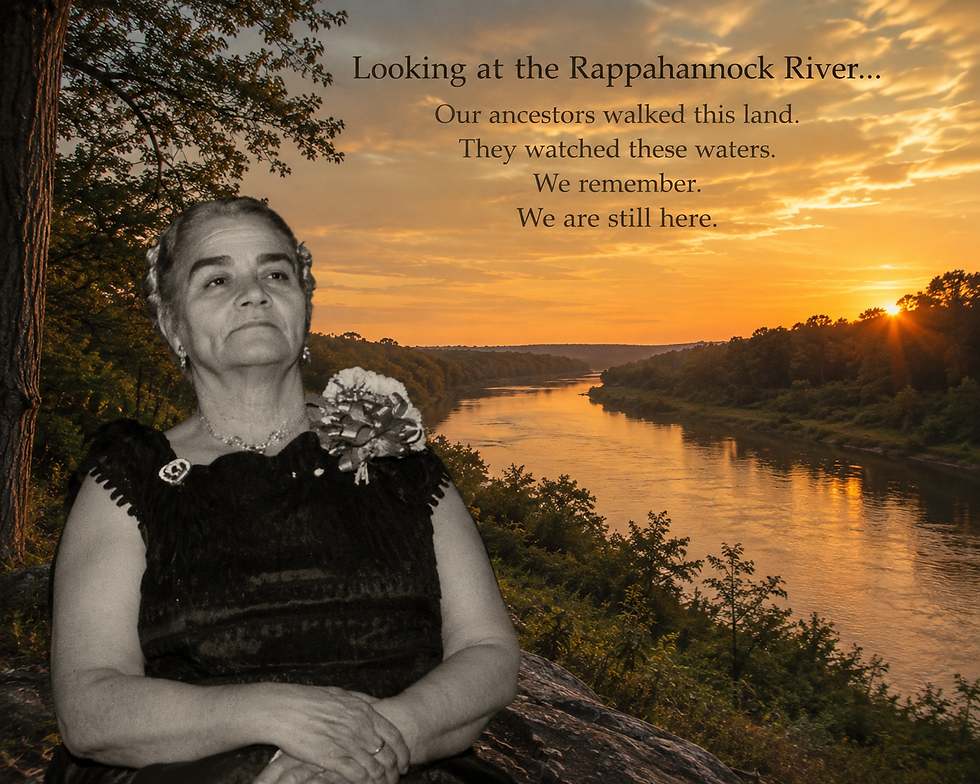
Now imagine the generations.
A Paleoindian hunter moves through a changing Ice Age landscape.
Thousands of years later, an Archaic family gathers beside a river.
Centuries pass, and a Woodland community prepares food in pottery vessels while crops grow nearby.
Later still, Native people watch unfamiliar European ships enter waters their ancestors had known for generations.
These are not four unrelated stories.
They are chapters in a much longer history.
And perhaps the most important thing to remember as we begin exploring them is this:
Virginia's Native history did not begin with Jamestown.
By the time the English established Jamestown in 1607, Native peoples had already experienced thousands upon thousands of years of environmental change, technological innovation, family life, community development, trade, conflict, cooperation, spirituality, adaptation, and survival.
The archaeological objects they left behind—a stone point, a hearth, a piece of pottery, the remains of a village—are therefore more than artifacts.
They are traces of human lives.
Behind every object was a person.
Behind every person was a family.
Behind every family were generations.
And behind those generations is a story stretching back to a time before Virginia had a name.
About the Author

Dr. Guadalupe Vanderhorst Rodriguez, D.Ac., L.Ac. is an author, genealogist, historian, and educator with more than 40 years of genealogical research experience. Her research was featured on the television series Who Do You Think You Are?, and she is the author of several genealogy and family-history books.
Dr. Rodriguez is the founder of the Tan American Historical Association, Kicotan Wellness, and Kicotan Haven, and is one of the founders of the Kikotan Nation. Her work is dedicated to researching and preserving family histories, Indigenous heritage, and ancestral stories so they can be passed forward to future generations.
Her guiding philosophy is simple: Remember the Past. Care for the Present. Prepare for the Future.

Comments