


How Do You Reconnect with Your Indigenous Ancestors When the Family Story Has Been Lost?

Genealogy, family records, oral history, and the journey of finding the people who came before you
What do you do when you know your ancestors were there—but their stories disappeared from your family?
Perhaps you grew up hearing that your family had Native American ancestry, but no one could tell you exactly who the ancestor was. Maybe an elder mentioned a Nation or community, but the details were never written down. Perhaps you inherited an old photograph of someone whose name has been forgotten.

Or maybe you began researching your family tree and discovered something unexpected.
A census record describes an ancestor one way. A marriage record describes the same person differently. A family story tells you something that does not seem to appear in the official records at all.
For many descendants, reconnecting with Indigenous ancestry begins with questions rather than answers.
The good news is that a missing family story does not necessarily mean the story is gone forever.
Sometimes it is waiting to be rediscovered.
Why Were Some Indigenous Family Stories Lost?
Family history can disappear surprisingly quickly.
An elder die before anyone records their memories. Photographs are passed down without names written on the back. Families move to another county or state. Children grow up knowing their grandparents but never asking where their grandparents' parents came from.
For Indigenous families, the historical circumstances can be even more complicated.
Over generations, families experienced migration, displacement, changing communities, intermarriage, and changing racial classifications in government and church records.

The terminology used by record keepers was not always consistent, and the identity recorded for an individual may not necessarily reflect how that person understood themselves or how their family and community understood them.
This means Indigenous genealogy often requires looking beyond a single document.
One record is a clue. It is rarely the entire story.
Begin With What Your Family Already Knows
Before searching historical databases, begin at home.
Talk with the oldest relatives you can reach.

Instead of simply asking, “Are we Native American?” ask more specific questions.
Who were your grandparents?
Where did they live?
What were their parents' names?
Where did the family live before that?
Did anyone ever mention a Native community or Nation?
Were there places the family returned to for gatherings, fishing, hunting, ceremonies, or visits?
Who were the relatives people talked about when you were growing up?
Ask about nicknames, occupations, churches, cemeteries, military service, migrations, marriages, and neighboring families.
Small details can become important genealogical clues.
And when an elder shares a story, record it—with permission.
Oral history should be preserved even when every detail cannot immediately be documented.
Write Down the Oral History
Family stories are valuable, but memory changes over time.
Write down what you have been told and identify who told you the story.
Instead of recording:
“We are descended from a Native woman.”
Record something more precise:
“My grandmother told me that her grandfather's mother was Native and that the family lived in Virginia.”
The second version preserves the source of the information.
That matters because genealogy is about building evidence.
Oral history gives you a starting point. Historical records can then help you investigate it.
Start With Yourself and Work Backward
One of the most common genealogy mistakes is beginning with the person you hope is your ancestor.
Instead, begin with yourself.
Document yourself, your parents, your grandparents, and your great-grandparents.
Move backward one generation at a time.
For each person, try to establish:
Full name and name variations
Birth date and birthplace
Marriage or spouse
Children
Residence
Occupation
Death date
Burial location
Most importantly, document how you know that one generation connects to the next.
That creates a chain of evidence between you and the ancestor you are researching.
Follow the Census Records
Census records can be especially useful because they allow us to follow a family across decades.
They may reveal where a family lived, approximate ages, occupations, household members, birthplaces, neighbors, and other valuable information.
But census records must be interpreted carefully.
Names may be misspelled.
A person's age may change from one census to another.
Birthplaces can differ.
And racial classifications may change.
If you encounter those differences, do not automatically discard the record.
Ask another question:
What other evidence tells me this is the same person?
Compare spouses, children, ages, occupations, locations, neighbors, and other relatives.
Genealogy is often about recognizing patterns across multiple records.
Look at the Neighbors
This is one of the most valuable lessons in family-history research:
Do not research your ancestor alone.
Look at the people living around them.
Families often migrated together.
Brothers and sisters lived near one another. Cousins married into neighboring families. Parents sometimes lived near adult children. Families attended the same churches and were buried in the same cemeteries.
When researching Indigenous ancestry, these networks can be particularly important.
A surname by itself may tell you very little.
A surname appearing repeatedly among interconnected families in the same community can tell you much more.
Genealogists sometimes call this studying a person's family, associates, and neighbors.
Your ancestor's community can help reveal your ancestor's story.
Search the Land Records
Land records are sometimes overlooked because researchers assume they only tell us who owned property.
They can reveal much more.
Deeds may identify spouses, relatives, neighboring landowners, waterways, roads, plantations, towns, and geographic boundaries.
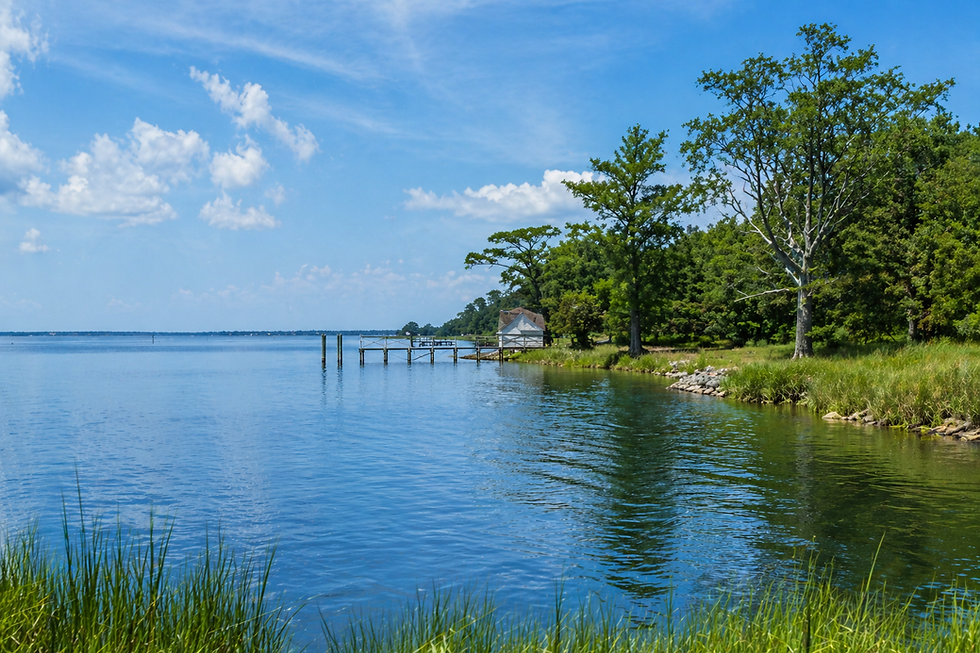
If a family remained in one region for several generations, land records can help reconstruct the community in which they lived.
For Kikotan descendants researching families connected to Tidewater Virginia, geography is particularly important.
Learn the historical names of the places your ancestors inhabited.
Study rivers, creeks, bays, old roads, counties, and changing jurisdictional boundaries.
Modern county lines may not match the boundaries that existed during your ancestor's lifetime.
Sometimes understanding where an ancestor lived helps explain who surrounded them.
Study Family Photographs Carefully
An unidentified photograph is not necessarily a dead end.
Turn it over.
Look for handwriting, photographer stamps, studio names, dates, locations, clothing, jewelry, military uniforms, houses, automobiles, or landmarks.
Then ask relatives:
Do you recognize this person?
Who owned this photograph?
Whose family album did it come from?
Does this person resemble anyone else in the family?
Do not assign an identity based solely on physical appearance.
A photograph can provide genealogical clues, but appearance alone cannot establish Indigenous ancestry or citizenship in a Native Nation.
Preserve the photograph and document what is known, suspected, and unknown separately.
Be Careful with Surnames
People frequently search online for questions such as:
“Is my surname a Native American name?”
A surname can be an important clue, but it is not proof of Indigenous ancestry.
The same surname may appear among Native, European, African American, and multiracial families.
Spellings can also change dramatically across generations.
Search for variations.
If you are researching a family named Tann, for example, do not simply collect every historical person who carried that surname and assume they belonged to the same family.
Instead ask:
Where did this person live?
Who were their parents?
Who did they marry?
Who were their children?
Who were their neighbors?
Can records connect them to my documented family?
A surname opens a door. Evidence tells you whether you should walk through it.
Understand the Difference Between Ancestry and Citizenship
Responsible Indigenous genealogy requires another important distinction.
Discovering an Indigenous ancestor does not automatically establish citizenship or membership in a present-day federally recognized, state-recognized, or other Native Nation or community.
Native Nations are living political and cultural communities, not simply categories of DNA or distant ancestry.
Each Nation determines its own citizenship or enrollment requirements.
If your research points toward a particular Native Nation, learn about that Nation from the Nation itself.
Study its history.
Learn its terminology.
Find out what genealogical documentation it requires.
Most importantly, approach the community respectfully rather than beginning with the expectation that the community must validate a family story.
What About DNA?
DNA testing can sometimes help identify biological relatives and provide clues about ancestral origins.
But DNA should be treated as one research tool, not the entire answer.
Ethnicity estimates can change as testing companies update their databases and algorithms.
A DNA ethnicity percentage does not identify a specific historical ancestor by itself, nor does it establish citizenship in a Native Nation.
The most valuable DNA discoveries for genealogy may come from identifying genetic relatives and then combining those relationships with traditional documentary research.
DNA can provide clues.
Genealogy still requires evidence.
Create an Evidence Trail
As you research, keep a research log.
Record:
What did I search?
Where did I search?
What did I find?
What did I not find?
What should I search next?
Save copies of records and record their sources.
Separate information into three categories:
Documented — supported by reliable evidence.
Probable — multiple clues support the conclusion, but more evidence is needed.
Family tradition — passed down through the family but not yet independently documented.
There is nothing wrong with writing “unknown.”
In responsible genealogy, unknown is better than invented.
Your Ancestors May Be Waiting in the Records
There may come a moment when the pieces begin to connect.
A name from your grandmother's story appears in a census.
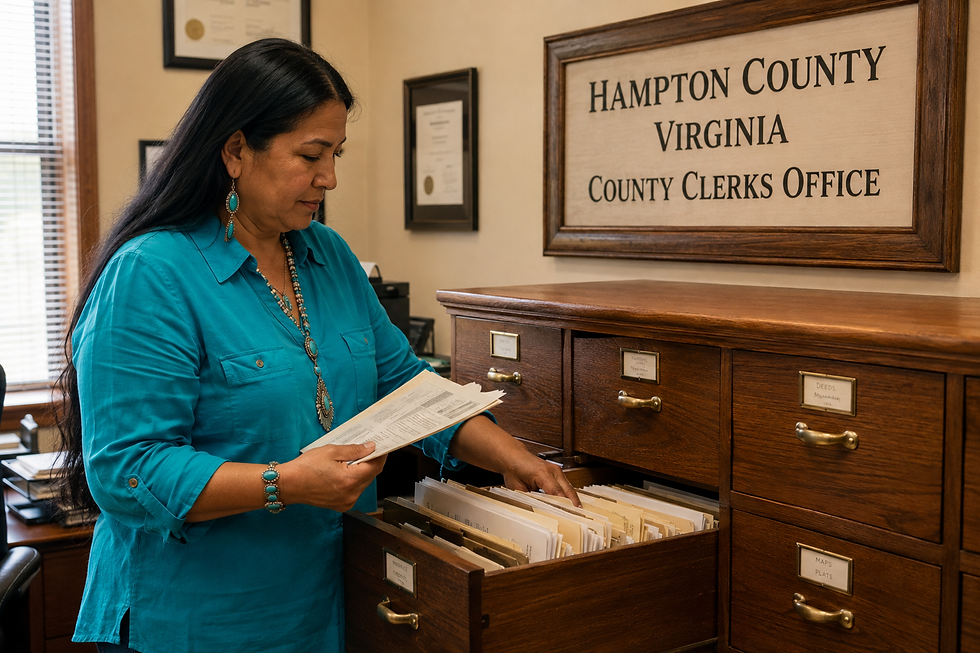
That person appears beside another familiar surname.
A marriage record connects the two families.
A deed places them near the same creek.
A cemetery record identifies another generation.
Suddenly, the family story that seemed lost begins to take shape.
Not because one document revealed everything.
Because you followed the evidence.
One person. One family. One community. One generation at a time.
Reconnecting Is Also About Responsibility
Finding an Indigenous ancestor should not simply be about adding another branch to a family tree.
Ask what you will do with the knowledge.
Will you preserve the records?
Will you interview the elders?
Will you identify the people in old photographs?
Will you teach your children where their ancestors lived?
Will you preserve the family stories for grandchildren who have not yet been born?
Genealogy allows us to look backward.
Responsibility asks us to look forward.

That is where family history connects with the principle of Seven Generations.
Someone before us preserved enough information for us to find our way back.
Now we have an opportunity to preserve what we discover for those who will come after us.
Begin With One Name
If your Indigenous family story has been lost, you do not have to solve everything today.
Begin with one person.
Write down their name.
Find where they lived.
Learn who their parents were.
Find their brothers and sisters.
Study their neighbors.
Search the census.
Look for their marriage.
Search the deeds.
Find the cemetery.
Listen to the elders.
Document every discovery.
Then move backward another generation.
You may not know where the journey will lead.
But every carefully documented ancestor brings another piece of your family's story back into the light.
Our ancestors' stories deserve more than assumptions. They deserve careful research, respect, preservation, and remembrance.
Remember the Past. Care for the Present. Prepare for the Future.
For the Seventh Generation — Kikotan Nation
About the Author

Dr. Guadalupe Vanderhorst Rodriguez, D.Ac., L.Ac. is an author, genealogist, historian, and educator with more than 40 years of genealogical research experience. Her genealogical research was featured on the television program Who Do You Think You Are?, highlighting her dedication to uncovering and preserving family history.
As a direct descendant of the Tann family and a historian of the Kikotan Nation, Dr. Rodriguez is committed to preserving Indigenous history, ancestral stories, and family legacies for future generations.
Her work reflects the principle of Seven Generations—remembering the past, caring for the present, and preparing for the future.


Comments