


The Lost Story of Kikotan Village: A Homeland Forgotten

A Thriving Indigenous Community Once Stood Where History Books Rarely Look
Today, visitors to Hampton, Virginia, may know the area as part of the birthplace of English America. Yet long before English settlers arrived, the shores of the Chesapeake Bay were home to a thriving Indigenous community known as Kikotan.
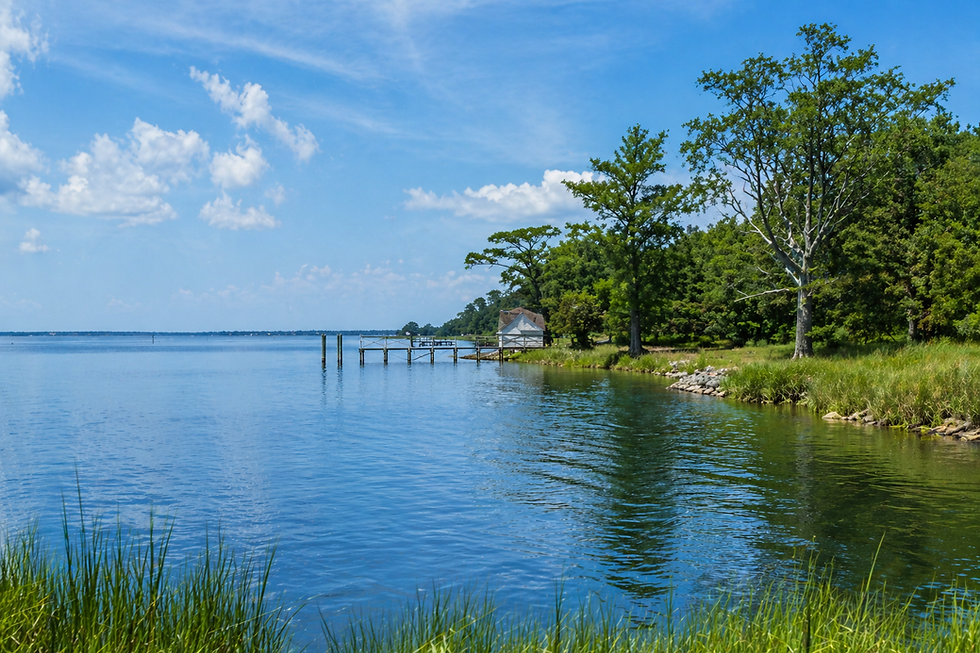
The story of Kikotan Village is one of prosperity, resilience, and ultimately displacement. It is a story that has largely disappeared from mainstream history, despite its significance to the Indigenous history of Virginia.
For generations, the Kikotan people lived along the shores of what is now Hampton. They built homes, raised families, harvested the rich resources of the Chesapeake Bay, and maintained a vibrant culture deeply connected to the land and water.
Yet within a few short years of English settlement, their homeland would be forever changed.
The Homeland of the Kikotan People
Kikotan Village was located near the entrance of the Chesapeake Bay, one of the most strategically important locations in eastern Virginia.
The village occupied fertile lands near abundant waterways that provided food, transportation, and trade opportunities. The Chesapeake Bay was the center of life for the Kikotan people.

Its waters supplied fish, oysters, clams, crabs, and waterfowl. Canoes traveled its rivers and inlets, connecting neighboring communities and facilitating trade throughout the region.
The surrounding forests provided timber, medicinal plants, berries, nuts, and game. The land supported agriculture, allowing families to cultivate corn, beans, and squash.
For countless generations, the Kikotan people lived in harmony with this environment.
Chief Pochin and the Kikotan Community
In 1597, Pochin was recorded as the chief of the Kikotan people.
Historical records preserve his name, but like many Indigenous women of the period, the name of his wife was never recorded. She was identified simply as a Kikotan woman.
Together, they represented a community that had existed long before European ships appeared on the horizon.
The Kikotan people were part of the larger Powhatan world, connected through trade, diplomacy, family relationships, and shared cultural traditions.
Their village was not an isolated settlement but an important part of a thriving Indigenous network extending throughout Tidewater Virginia.
The Arrival of the English
Everything began to change in 1607 when English settlers established the colony of Jamestown.
The newcomers entered a region already occupied by organized Indigenous societies. Initial encounters included trade and diplomacy, but tensions quickly emerged as English demands for food, land, and resources increased.
The English viewed land ownership differently than the Indigenous peoples of Virginia. What Indigenous communities understood as shared stewardship of the land, the English sought to claim as private property.
As the colony expanded, pressure on Indigenous communities intensified.
The Attack on Kikotan
One of the most devastating events in Kikotan history occurred in 1610 and 1611 during the period known as the Anglo-Powhatan Wars.
Governor Sir Thomas Gates viewed the Indigenous communities surrounding English settlements as obstacles to colonial expansion.

Historical accounts describe military campaigns against the Kikotan people and other Powhatan communities.
According to colonial records, Governor Gates ordered actions intended to permanently remove the Kikotan people from their homeland.
His objective was clear: eliminate Indigenous resistance and seize control of the land.
One account attributes to Gates the intention to ensure that the Kikotans would "be no longer."
The attack resulted in the displacement of the Kikotan people and the occupation of their village by English colonists.
The Renaming of a Homeland
Following the removal of the Kikotan people, the English established control over the area.
The Indigenous name Kikotan gradually disappeared from official colonial records and maps.
The region eventually became known as Elizabeth City, named in honor of Princess Elizabeth, daughter of King James I of England.

With the change of name came a gradual erasure of Indigenous identity from the landscape.
Places that had once reflected Indigenous history were replaced with English names, making it easier for future generations to forget who had lived there first.
Yet beneath the new name, the history of Kikotan remained.
More Than a Village Lost
The loss of Kikotan Village was about more than land.
It represented the disruption of families, traditions, community relationships, and ancestral connections that had developed over generations.
Homes were abandoned.
Sacred places were left behind.
Traditional gathering areas were occupied by newcomers.
The people who had cared for the land were forced to adapt to a dramatically changing world.
Despite these hardships, the descendants of Virginia's Indigenous peoples survived.
Their cultures, traditions, and stories endured.
Why This History Matters
For centuries, many historical accounts focused primarily on English settlement while overlooking the experiences of Indigenous communities.
The story of Kikotan Village reminds us that Virginia's history did not begin with Jamestown.
Long before English colonists arrived, Indigenous peoples had built thriving communities, developed sophisticated political systems, and established deep connections to the Chesapeake Bay.
Understanding the history of Kikotan helps restore an important chapter of Virginia's past and honors the people whose homeland once stood where modern cities now exist.
Remembering Kikotan
Today, few physical reminders of Kikotan Village remain visible.

Yet the memory of the Kikotan people survives through historical research, oral traditions, and efforts to preserve Indigenous history.
Every time we tell their story, we help restore a piece of the past that was nearly forgotten.
The story of Kikotan is not merely one of loss.
It is also a story of resilience, survival, and remembrance.
Sacred Wisdom
The shores of the Chesapeake Bay once echoed with the voices of the Kikotan people.
For generations, they lived, worked, fished, farmed, and raised their families in a thriving Indigenous community.
Though their homeland was taken and its name changed, the story of Kikotan Village deserves to be remembered.
By learning about the original people of this land, we gain a deeper understanding of Virginia's true history and honor those whose legacy continues to shape the region today.
Learn More
To learn more about the history, culture, and preservation efforts of the Kikotan Nation, visit:
Kikotan Nation www.kikotannation.org
Together, we can preserve these stories for the next seven generations.


Comments