


The Untold Indigenous History of Virginia Before Jamestown

Long Before Jamestown: A Story Waiting to Be Told
When most people think about the history of Virginia, they often begin with Jamestown in 1607.
History books tell the story of English settlers arriving on unfamiliar shores and establishing the first permanent English colony in North America. Yet this version of history leaves out thousands of years of human experience that existed long before the arrival of Europeans.
The truth is that Virginia was not an empty wilderness waiting to be discovered. It was home to thriving Indigenous communities with rich cultures, complex governments, extensive trade networks, and deep spiritual connections to the land.
Among these communities were the people of the Kikotan Nation, whose homeland stretched along the shores of the Chesapeake Bay.
To truly understand Virginia's history, we must look beyond Jamestown and rediscover the Indigenous peoples who called this land home for countless generations.
A Land Filled with Life
Long before European ships appeared on the horizon, Virginia was a vibrant landscape of forests, rivers, wetlands, and fertile fields. Indigenous peoples had developed sustainable ways of living that allowed them to thrive while maintaining balance with nature.

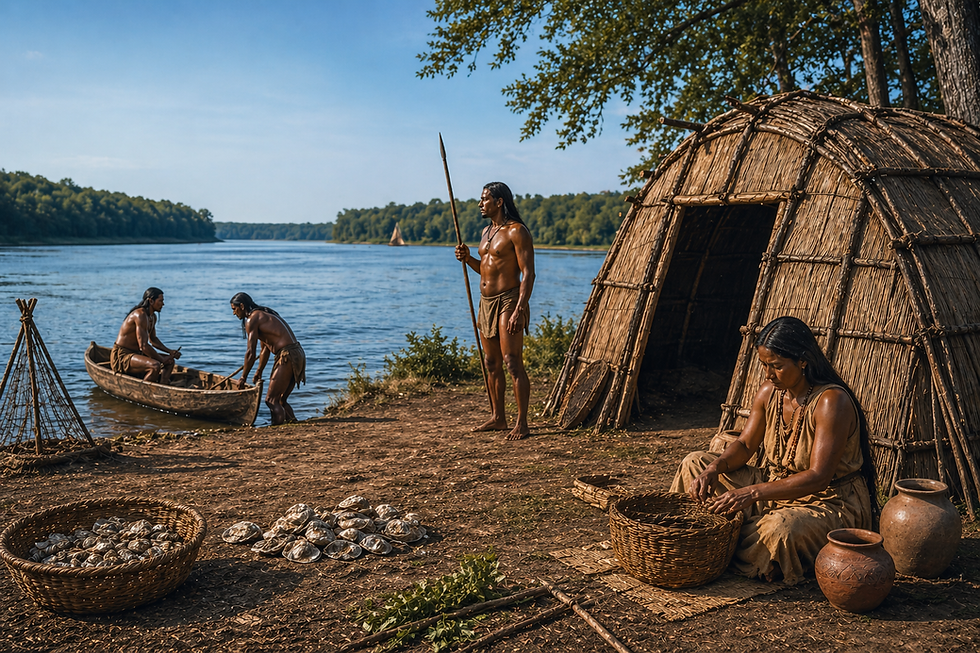
The Chesapeake Bay provided an abundance of food and resources. Fish, oysters, clams, crabs, waterfowl, and other wildlife sustained communities throughout the year.
The surrounding forests supplied timber, medicinal plants, berries, nuts, and game animals.
The people understood the seasonal rhythms of the land.
They knew when fish would migrate, when crops should be planted, and where wildlife could be found. This knowledge had been passed down through generations and formed the foundation of their way of life.
The Kikotan Homeland
The Kikotan people lived along the southeastern shores of the Virginia Peninsula near the entrance of the Chesapeake Bay. Their location provided access to some of the richest natural resources in the region.
The waters surrounding Kikotan territory were central to daily life. Canoes traveled the rivers and bays, connecting communities and facilitating trade. Families fished the waters, gathered shellfish along the shoreline, and cultivated fields of corn, beans, and squash.
The Kikotan were part of a larger network of Indigenous communities that shared relationships through trade, diplomacy, marriage, and cultural exchange.
Their homeland was not isolated but connected to a vast Indigenous world extending throughout the Eastern Woodlands.
The Powhatan Confederacy
By the late 1500s, many Indigenous communities in eastern Virginia were connected through the Powhatan Confederacy, a political alliance led by the powerful leader Wahunsenacawh, commonly known as Chief Powhatan.
The Confederacy included numerous tribes and villages spread throughout the Tidewater region. While each community maintained its own identity and traditions, they worked together through alliances that provided security, cooperation, and shared prosperity.
This sophisticated political structure demonstrated the complexity of Indigenous governance long before European settlement. Decisions were made through leadership, diplomacy, and relationships that had evolved over generations.
Daily Life Before European Contact
Life within Indigenous communities was organized around family, community, and the natural world.
Women played essential roles in agriculture, food preparation, family life, and cultural preservation. They cultivated crops, managed households, and passed knowledge to younger generations.

Men often focused on hunting, fishing, diplomacy, trade, and community protection. However, responsibilities frequently overlapped, and cooperation was essential to community success.
Children learned by observing elders and participating in daily activities. Education occurred through storytelling, hands-on experience, and oral traditions rather than formal classrooms.
Every member of the community contributed to collective well-being.
The Power of Oral Tradition
Long before written records existed in Virginia, Indigenous peoples preserved history through oral traditions.
Stories carried important teachings about creation, morality, family responsibility, leadership, and survival. Elders served as keepers of knowledge, ensuring that each generation understood its place within a larger historical and spiritual story.
These traditions preserved information about ancestors, migrations, significant events, and cultural practices.
Today, oral histories remain an invaluable source of Indigenous knowledge and historical understanding.
Spiritual Connections to the Land
For Indigenous peoples of Virginia, the land was more than property—it was a living relationship.
Rivers, forests, animals, and plants were viewed as interconnected parts of a larger world. Respect for nature was woven into daily life, ceremonies, and community values.

This perspective encouraged stewardship rather than exploitation. Resources were used carefully with consideration for future generations.
The belief that decisions should benefit those yet unborn remains one of the most enduring Indigenous teachings and continues to inspire communities today.
The Arrival of Europeans
When English settlers arrived in Virginia in 1607, they entered a region already occupied by organized, thriving Indigenous societies.
Early interactions included trade, diplomacy, cooperation, and cultural exchange. Indigenous peoples shared knowledge about local foods, agriculture, geography, and survival techniques that helped newcomers endure difficult conditions.

However, increasing competition for land and resources soon created tensions. The arrival of Europeans brought profound changes that affected Indigenous communities throughout the region.
Despite these challenges, Indigenous peoples demonstrated remarkable resilience and adaptability.
Why This History Matters Today
Understanding Virginia's Indigenous history provides a more complete picture of the past.
It reminds us that the story of America did not begin with European settlement. Indigenous nations had already built societies, cultivated relationships with the land, and developed rich cultural traditions over thousands of years.
Learning this history also helps us recognize the contributions, resilience, and continued presence of Indigenous peoples today.
The descendants of Virginia's First Peoples continue to preserve traditions, protect cultural knowledge, and share their stories with future generations.
Preserving the Legacy of the Kikotan Nation
The mission of the Kikotan Nation is to educate others about the history, culture, and legacy of the Indigenous peoples who lived along the Chesapeake Bay long before Jamestown.
By preserving stories, documenting history, and sharing ancestral knowledge, we ensure that these voices are not forgotten.

History is not only about the past—it is a gift we leave for future generations.
When we honor the stories of those who came before us, we strengthen our understanding of who we are today and who we may become tomorrow.
Conclusion
The history of Virginia did not begin in 1607.
It began thousands of years earlier with Indigenous peoples who built communities, cultivated the land, navigated the waterways, and passed their wisdom from generation to generation.
Their story deserves to be told.
As we continue to uncover the untold Indigenous history of Virginia, we gain a deeper appreciation for the resilience, knowledge, and enduring legacy of the First Peoples who shaped this land long before Jamestown.
Learn More
To learn more about the history, culture, and ongoing preservation efforts of the Kikotan Nation, visit:
Kikotan Nation www.kikotannation.org
Together, we can preserve these stories for the next seven generations.


Comments