


What Does Seven Generations Mean? Understanding an Indigenous Way of Thinking

Have you ever wondered how the choices you make today might affect your family 50, 100, or even 150 years from now?

Most of us are accustomed to thinking about the immediate future. We plan for tomorrow, next month, or perhaps the next few years. We think about paying bills, caring for our families, building careers, protecting our health, and
preparing for retirement.
But what if we expanded that view?
What if, before making an important decision, we asked:
How might this choice affect the generations who come after me?
This question is at the heart of what is often described as Seven Generations thinking—an Indigenous way of understanding responsibility, relationships, family, community, and the future.
While teachings and traditions differ among Indigenous nations, the broader idea encourages us to look beyond our own lifetime. It reminds us that we are part of something much larger than ourselves.
We inherited a world shaped by those who came before us.
And we are helping shape the world that others will inherit.
What Does “Seven Generations” Mean?
Seven Generations thinking asks us to consider how our actions today may affect people who will live many generations into the future.
Imagine standing in the middle of a long family story.
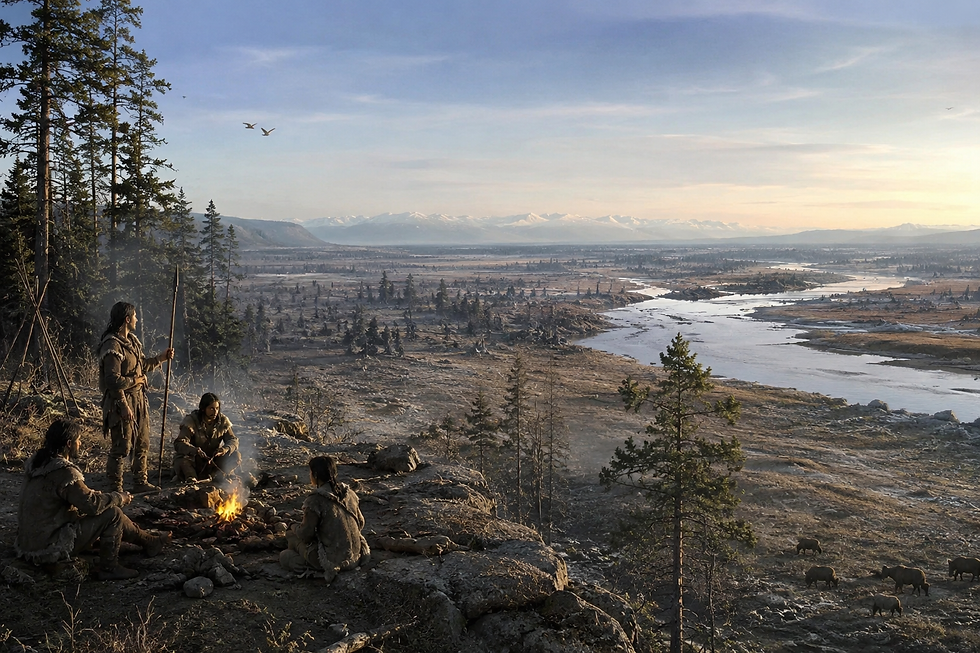
Behind you are your parents, grandparents, great-grandparents, and generations of ancestors whose lives eventually made your life possible.

Ahead of you are your children, grandchildren, great-grandchildren, and descendants you may never personally meet.
You are standing between the two.
That perspective changes the way we think about our lives.
Instead of asking only:
“What is best for me right now?”
we can also ask:
“What am I creating for the people who will come after me?”
Seven Generations thinking encourages us to recognize that today's choices can become tomorrow's inheritance.
We Are Part of a Continuing Story
One of the most meaningful lessons within this way of thinking is the recognition that our lives do not exist in isolation.
Every person is part of a larger story.
Think about your own family for a moment.
Someone before you made decisions that influenced where your family lived. Someone preserved a photograph. Someone told a family story. Someone planted a garden, purchased land, learned a skill, raised a child, survived hardship, practiced a tradition, or taught a lesson.

Some of those choices may still influence your life today.
You may carry a family name that existed generations before you were born.
You may prepare food using a recipe passed down through your family.
Perhaps you remember something your grandmother taught you.
Maybe you have an old photograph of an ancestor whose voice you never heard, yet whose face reminds you that your story began long before your birth.
This is one of the beautiful ideas behind thinking in generations:
We are connected to people we have never met.
That connection reaches backward toward our ancestors and forward toward our descendants.
Thinking Beyond Ourselves
Modern life often encourages short-term thinking.
We are constantly asked what we want now.
What can we buy?
What can we accomplish?
What will make life easier today?
Seven Generations thinking invites us to ask a different set of questions.
What are we preserving?
What are we teaching?
What are we protecting?
What are we leaving behind?
And perhaps most importantly:
What kind of ancestor are we becoming?
That last question can be powerful.
Most of us think about ancestors as people from the past. But someday, we will be the ancestors.
A descendant may one day look at your photograph.
They may discover your name while researching their family history.
They may live with the consequences of decisions being made during your lifetime.
What would you want that person to know about you?
What would you want them to inherit from you?
Seven Generations and Family
Seven Generations thinking can begin right inside our families.
Family inheritance is much more than money or property.
We also inherit stories, values, traditions, knowledge, relationships, memories, and ways of understanding the world.
That is why preserving family history can be so important.
When an elder tells a story and someone takes the time to record it, something valuable has been protected.

When parents teach children where their family came from, another connection is preserved.
When photographs are identified instead of being placed anonymously in a box, future generations receive something precious: a connection to the people who came before them.
Imagine your great-great-grandchild discovering a journal you wrote.
Inside are stories about your parents and grandparents, photographs with names and dates, descriptions of family traditions, and lessons you learned throughout your life.
To you, it may simply be a journal.
To that descendant, it could become a bridge across generations.
Seven Generations and the Natural World
Thinking about future generations also changes how we understand our relationship with the Earth.
Water, forests, animals, plants, soil, and other natural resources are not important only because we need them today.
Future generations will need them too.
A river protected today may provide clean water long after we are gone.
A forest preserved today may shelter wildlife generations from now.
Land cared for responsibly can continue supporting families and communities far into the future.
This way of thinking moves us away from asking:
“How much can we take?”
and toward asking:
“How can we care for what has been entrusted to us?”
Responsibility becomes part of our relationship with the natural world.
We receive something valuable, care for it during our lifetime, and pass it forward.
Small Decisions Can Become a Legacy
Thinking Seven Generations ahead may sound like an enormous responsibility.
But it does not mean that every person must change the world.
Sometimes legacy begins with very ordinary actions.

You might record your grandmother telling a family story.
You might label the people in old photographs.
You might teach a child a family tradition.
You might plant a tree.
You might protect a piece of family history.
You might write down what you have learned.
You might repair a relationship.
You might teach younger generations to care for elders.
You might preserve knowledge that otherwise could disappear.
These actions may seem small today.
Across generations, however, small actions can become meaningful gifts.
Becoming a Good Ancestor
There is a question worth carrying with us:
What does it mean to become a good ancestor?
A good ancestor does not have to be famous.
They do not need monuments or buildings named after them.
A good ancestor may simply be someone who leaves the next generation with something worth carrying forward.
Perhaps that is knowledge.
Perhaps it is land.
Perhaps it is a family story.
Perhaps it is compassion.
Perhaps it is cultural understanding.
Perhaps it is a tradition that might otherwise have disappeared.
Or perhaps it is simply the example of living with responsibility toward others.
Seven Generations thinking reminds us that legacy is not only something we leave when our lives end.
Legacy is something we create while we are living.
Seven Generations Behind Us, Seven Generations Ahead
Imagine a long line stretching across time.
Behind you stand generations of ancestors.
And here you are, living in the present.
You received something from those who came before you—whether family, knowledge, culture, land, stories, traditions, opportunities, or lessons.
Now you have an opportunity to decide what you will pass forward.
That is why thinking in generations can transform the way we approach everyday life.
Instead of seeing ourselves as isolated individuals, we begin to understand ourselves as links in a continuing chain.
We become caretakers of what came before us and contributors to what comes next.
A Question to Carry with You
You do not have to know exactly what the world will look like seven generations from now.
None of us can.
The purpose is not to predict the future.
The purpose is to remember the future when making choices in the present.
The next time you make a decision about your family, community, traditions, environment, or legacy, consider asking yourself:
Will this choice leave something better for those who come after me?
That simple question can change the way we think about responsibility.
Our ancestors lived lives that eventually became part of our story.
Today, we are writing the next chapter.
And generations from now, someone may inherit what we choose to preserve, protect, teach, and pass forward.
Remember your ancestors. Honor what has been entrusted to you. And become a good ancestor for the generations yet to come.
Kikotan Nation — For the Seven Generations


Comments