


Who Were the Kikotan People? The Untold History of a Virginia Tribe

There are stories that live in books…and then there are stories that live in the land.
The story of the Kikotan people is one that was never meant to be forgotten—yet for generations, it was nearly lost to time. It does not begin with colonization, nor does it begin with written records. It begins much earlier, in the quiet rhythm of the earth, in the tides of the Chesapeake Bay, and in the footsteps of a people who understood what it meant to truly belong.
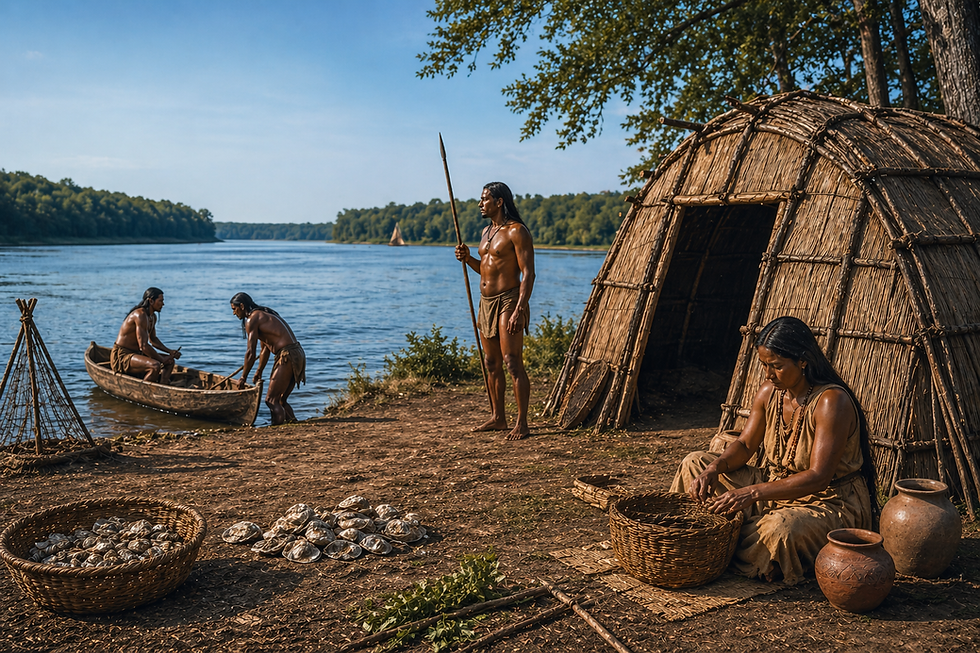
Long before the English ships appeared on the horizon in the early 1600s, the Kikotan people lived along the shores of what we now call Hampton, Virginia. This land, rich with waterways and fertile soil, was not simply a place to live—it was a living relationship. The rivers spoke. The wind carried memory. The land itself held stories passed from one generation to the next.
Connection with the Kikotan Nation
The Kikotan were part of a larger cultural world, connected to the Algonquian-speaking peoples of the region. Among these connections was the powerful network often referred to as the Powhatan Confederacy, a group of tribes united through shared language, culture, and leadership. But the Kikotan were not just a small part of something larger—they were a people with their own identity, their own traditions, and their own sacred relationship with the land.
To understand the Kikotan, you must first understand how they lived—not just physically, but spiritually.
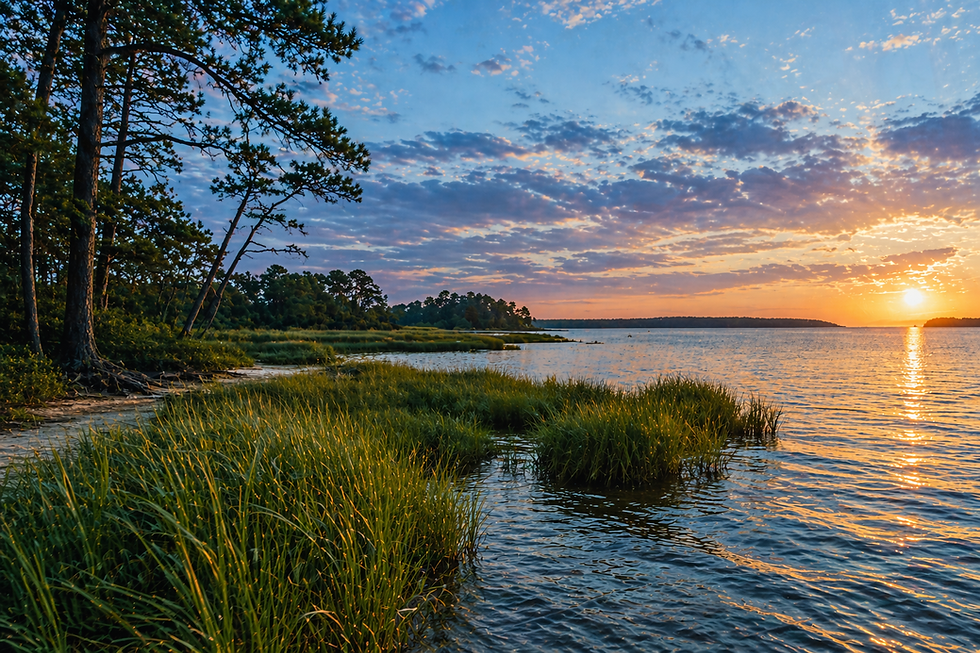
Their lives moved in harmony with the seasons. In the warmer months, the waters of the Chesapeake Bay provided an abundance of fish and shellfish. Men and women worked together, using knowledge passed down through generations to harvest what they needed—never more, never less. Oyster beds, fish traps, and canoes carved from trees were not just tools; they were extensions of a way of life rooted in respect.
On land, the Kikotan cultivated crops that sustained their communities—corn, beans, and squash, often called the “Three Sisters.” These crops were grown together, each supporting the other, just as the people supported one another within their villages. This was not simply agriculture. It was a philosophy.
A reminder that life thrives in balance and interconnection.
Their homes, known as longhouses or dome-shaped structures, were built from materials gathered from the surrounding environment—wood, bark, reeds. Nothing was wasted. Everything had purpose. Inside these homes lived families bound not just by blood, but by shared responsibility, storytelling, and tradition.
And it was through storytelling that the Kikotan preserved who they were.
Remembrance through Oral History
History was not written—it was spoken, remembered, and felt. Elders carried the wisdom of generations. They spoke of creation, of ancestors, of the land and its meaning. Children learned not through instruction alone, but through listening, observing, and living within the rhythm of their people.

But then… something changed.
In 1607, the arrival of the English marked the beginning of a profound and painful shift. What began as curiosity quickly turned into conflict. The land that had always provided now became contested. The balance that had been carefully maintained for generations was disrupted.
The Kikotan people were among the first to feel the impact.
Colonial expansion did not simply bring new people—it brought new systems, new beliefs, and a new way of seeing the world that did not recognize the deep spiritual and cultural connection Indigenous people had with the land. Villages were displaced. Lives were altered. Traditions were interrupted.
There are records that tell fragments of this story—names, dates, brief mentions in colonial documents. But these records often tell the story from only one side. They do not capture the emotion. They do not capture the loss.
They do not capture what it feels like to have your world changed forever.
And yet… the Kikotan story did not end.
Even as their presence became less visible in written history, their legacy continued—carried quietly through generations. Through family lines. Through whispered stories. Through a sense of identity that could not be fully erased.
This is where the story becomes something more than history.
Because today, the Kikotan Nation is not just something to study—it is something being remembered, reclaimed, and restored.
For many descendants, the journey back to the Kikotan is not a simple one. It often begins with a question… a feeling… a sense that something is missing. A search through genealogy records, family stories, and historical documents slowly reveals connections that had long been hidden.
And in that discovery, something shifts.
It becomes more than research. It becomes reconnection.
Kikotan Voices
The Kikotan Nation today represents a powerful act of remembrance. It is about giving voice to ancestors who were once silenced. It is about honoring a history that was nearly erased. And perhaps most importantly, it is about restoring a sense of identity to those who are still discovering where they come from.
There is a quiet strength in this work.
It does not demand attention—it invites reflection. It asks us to look beyond what we have been taught and to consider the stories that were left out. It reminds us that history is not always complete, and that sometimes, the most important truths are the ones we must seek out for ourselves.
The Kikotan people were never just a footnote in history. They were—and are—a living part of the story of Virginia.
Their connection to the land, their way of life, and their resilience in the face of change offer something deeply meaningful in today’s world. In a time where many feel disconnected, their story reminds us of the importance of balance, community, and belonging.

And perhaps that is why their story still matters.
Because it is not just about the past. It is about who we are… and who we are becoming.
As more people begin to explore Indigenous Virginia history, the name Kikotan is slowly being spoken again. Not as something distant or forgotten—but as something alive.
Something real.
Something that has always been there… waiting to be remembered.
Continue the Journey
If this story has stirred something within you, you are not alone.
There are still stories waiting to be uncovered… connections waiting to be made… and a deeper understanding of history waiting to be embraced.
Explore the history. Begin your genealogy journey. And take one step closer to understanding the legacy of the Kikotan Nation.
Because sometimes…when you begin to search for your history—
you find something even greater.
You find yourself.
To learn more about the Kikotan Nation visit: www.kikotannation.org


Comments